 Forli Emergency Locksmith

At 8:55 a.m., a lock is not just a lock. It is three employees waiting on the sidewalk, a delivery at the rear door, and the first customer due in five minutes.
At closing time, the problem changes. Now the key turns, but the storefront will not secure. Nobody wants to leave the business that way overnight.
Forli Emergency Locksmith works with Toronto shops, offices, clinics, rental properties, restaurants, and other commercial spaces. We help with business lockouts, rekeying, lock changes, damaged locks, master-key systems, and common commercial door hardware. The first question is simple: what is the lock problem stopping you from doing?
Those are three different calls.
An office lockout is mainly an access problem. A shop door that will not latch is a security problem. An employee who left without returning a key creates an access-control problem, even when every lock still works.
Tell us which result is needed first. It may be:
The person calling should be ready to show that they can approve the work. That may be the owner, manager, landlord, property manager, or another authorized contact. For a tenant in a managed building, permission may be needed before a lock is changed or new hardware is installed.
If the hardware is still reliable, rekeying may be enough. The working combination inside the cylinder is changed, and the old key no longer opens it. This can be useful after staff turnover, a lost key, a tenant change, or any time the number of uncontrolled copies becomes uncomfortable.
Replacement makes more sense when the lock is damaged, worn out, poorly fitted, or no longer suitable for the door.
This question can save trouble later. A small business may need one key for the owner, another for the opening manager, and limited access for cleaning or maintenance. Not everyone needs access to every room.
Before planning a commercial rekey, make a quick door list. Include the public entrance, rear door, stockroom, private office, utility area, and any shared building entrance. Then note who should open each one. That simple page is often more useful than arriving with a heavy key ring and trying to remember what every key does.
A master-key system can allow selected keys to open different groups of doors while a higher-level key opens more of them. It can be practical for offices, rental properties, clinics, and businesses with several controlled areas.
It also needs careful planning. Adding too many access levels can make the system hard to manage. A lost master key has a wider effect than a lost key to one room. After 20 years in the locksmith business, we still like to begin with a pencil, a door list, and a clear idea of who goes where. Hardware comes after the access plan makes sense.
Commercial entrances work hard. A busy shop door may open hundreds of times in a day. Customers pull it, delivery workers hold it, and weather moves through it. Over time, hinges wear, closers drift out of adjustment, and the latch stops meeting the strike cleanly.
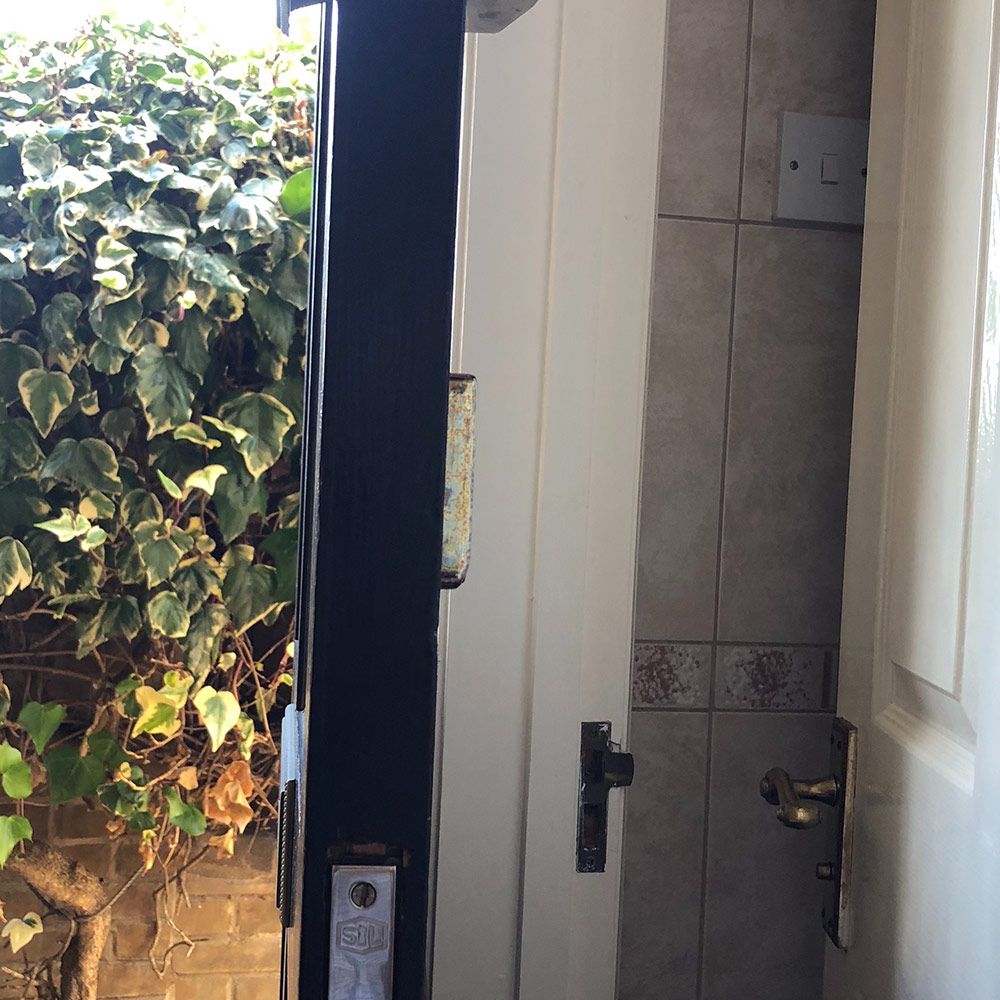
A mortise lock in an aluminum storefront is part of a larger setup. The cylinder may turn correctly while the latch, paddle, strike, closer, or door position causes the real trouble. Replacing only the cylinder will not fix a door that has dropped or a closer that no longer lets it shut.
Here is an easy check. With the door open, try the lock gently. If it works there but fights when the door is closed, alignment may be involved. Do not keep forcing the key. A snapped key and a bent door part can turn one fault into two.
Exit hardware affects more than convenience. If a panic bar, exit device, or door closer is not working properly, do not block it, tie it back, or make a temporary change that could interfere with safe exit. Tell us what the door is used for and whether it is an emergency exit. Some repairs may also involve building management, fire-safety rules, or another qualified door professional.
The damage may look centred on the lock, but forced entry often reaches the strike, frame, door edge, hinges, glass, or surrounding hardware. The first visit may be about making the opening secure enough for the night. A larger frame, glass, or door repair can follow once the immediate risk is handled.
Take photos if it is safe, and avoid moving broken pieces until police have finished with the area. Keep a note of what was repaired, rekeyed, or replaced. An insurer, landlord, or property manager may ask for the invoice and a clear description later.
There is also a people side to this job. Staff may be shaken. The owner may be trying to answer police, insurance, and landlord questions at the same time. We keep the lock discussion narrow: which opening is unsafe, what can be secured now, and what needs another visit.
A street-level shop near Queen and Parliament is one kind of call. An office several floors above King Street is another. The technician may need loading access, visitor parking, a service elevator, security approval, or someone to meet them in the lobby.
Clinics and offices may have patients, private records, or staff working behind the failed door. Restaurants have delivery times and rear entrances that are easy to miss from the street. A commercial unit inside a condo may be managed under different rules than the residential floors above it.
If you need a local locksmith, share more than the postal address. Include the business name, unit or floor, best entrance, loading instructions, and the name of the person who can approve the work. Near St. Lawrence Market, Moss Park, the Distillery District, or the downtown core, one good access note can save a trip around the block.
A few clear details help us understand the work and avoid bringing the wrong hardware:
Describe the problem and send photos when possible. The estimate can depend on the hardware, number of doors, required keys, damage, time, and any parts needed. Ask what is included and which details still need to be confirmed on site.
When the job is finished, test the door from both sides when it is safe to do so. Check the latch, key, closer, and any new hardware. If locks were rekeyed, count the keys and confirm which doors each one opens. Store the master-key information somewhere controlled rather than writing it on a key tag.
Forli Emergency Locksmith provides planned and urgent commercial locksmith service throughout Toronto and nearby GTA areas. When you contact us, tell us what the lock problem is stopping: opening, closing, securing the property, or controlling access. That answer gives the visit a useful place to start.